
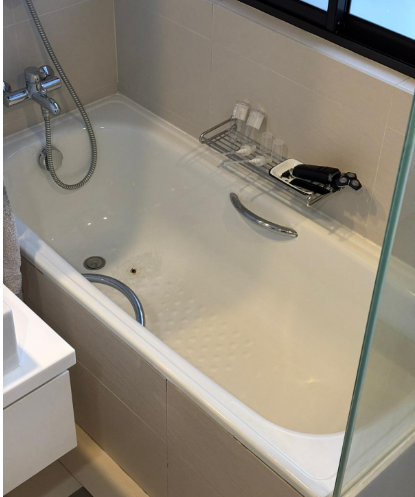
Rust in a bathtub usually means the protective enamel or coating has chipped and water has reached the steel or cast iron underneath. Caught early, a rust spot can be treated and sealed. Left alone, it spreads under the surrounding coating and can eventually eat through the tub. Brown stains on an acrylic tub are a different problem: acrylic itself cannot rust, so the stain usually comes from metal objects, fittings or water marks.

Is it real rust or just a stain?
| What you see | Likely cause | What to do |
|---|---|---|
| Brown ring or streak that wipes or scrubs off | Stains from water, toiletries or a metal can left standing | Clean with a gentle bathroom cleaner |
| Orange-brown spot at a chip, with a rough or raised edge | Rust: water has reached the metal under the enamel | Treat and seal before it spreads |
| Bubbling or flaking around a spot | Rust spreading under the coating | Remove the loose coating, treat, then recoat |
| Hole or soft metal you can press through | Corrosion right through the tub | Assess for replacement |
Why rust starts
- Chips from impact. A dropped shower head, bottle or tool cracks the enamel, and the metal underneath is exposed every time the tub is used.
- Worn or failed coatings. An earlier repaint or touch-up that was not bonded properly lets water creep underneath.
- Standing water. Areas that stay wet, such as around the drain and under bath mats, rust first.
- Abrasive cleaning. Scouring pads and harsh chemicals wear the surface thin over time.
How a rusty bathtub is repaired
- Assess: check how far the rust has spread, whether the metal is still sound, and whether the tub leaks or moves.
- Remove rust and loose coating: sand or grind the rust back to sound metal and remove any lifting coating around it.
- Treat and prime: apply a rust-inhibiting primer suited to the metal so the rust does not return under the new finish.
- Fill and smooth: fill pits and chips so the surface is level.
- Recoat: spray a PU finish over the repair, either as a spot repair or as a full resurface if the tub has many problem areas.
- Cure before use: keep water out of the tub until the advised curing period has passed.

Spot repair or full resurfacing?
A single small rust spot can often be spot-repaired. Bear in mind that an older tub’s colour and gloss have changed with age, so a spot repair may look slightly different from the surrounding surface. When there are several rust spots, widespread staining or a dull finish, a full bathtub resurfacing gives an even result and seals everything at once. For how the coating is applied, see roller or spray for bathtub refinishing.
What about DIY rust removers and touch-up kits?
Rust removers and enamel touch-up pens can improve the look of a small stain, but they rarely remove rust that has got under the enamel, so the spot often comes back. If the rust has a raised edge or keeps returning, it needs to be ground back and sealed properly.
How to stop rust coming back
- Rinse and wipe the tub dry after use, especially around the drain.
- Clean with a gentle, non-abrasive cleaner and a soft cloth.
- Keep shower heads, bottles and tools from hitting the surface, and fix any new chip quickly.
- Do not leave metal cans or razors standing in the tub.
- Lift bath mats after use so water does not sit underneath.
Frequently asked questions
Can an acrylic bathtub rust?
No. Acrylic is a plastic, so the brown marks are stains from water or metal objects, and they can usually be cleaned. Steel and cast iron tubs with enamel are the ones that rust.
Is a rusty bathtub dangerous?
Surface rust is mainly a cosmetic and hygiene problem, but rust that goes through the tub can cause leaks into the floor below. Get it assessed if you see bubbling, soft metal or water where it should not be.
Will repairing the rust fix a leak?
No. Leaks from the drain, overflow or waterproofing need their own repair. A coating should not be used to cover a leak.
9RENO repairs rusty bathtubs across Singapore. See 9reno.com: bathtub repair and resurfacing, or send photos of the rust on WhatsApp.