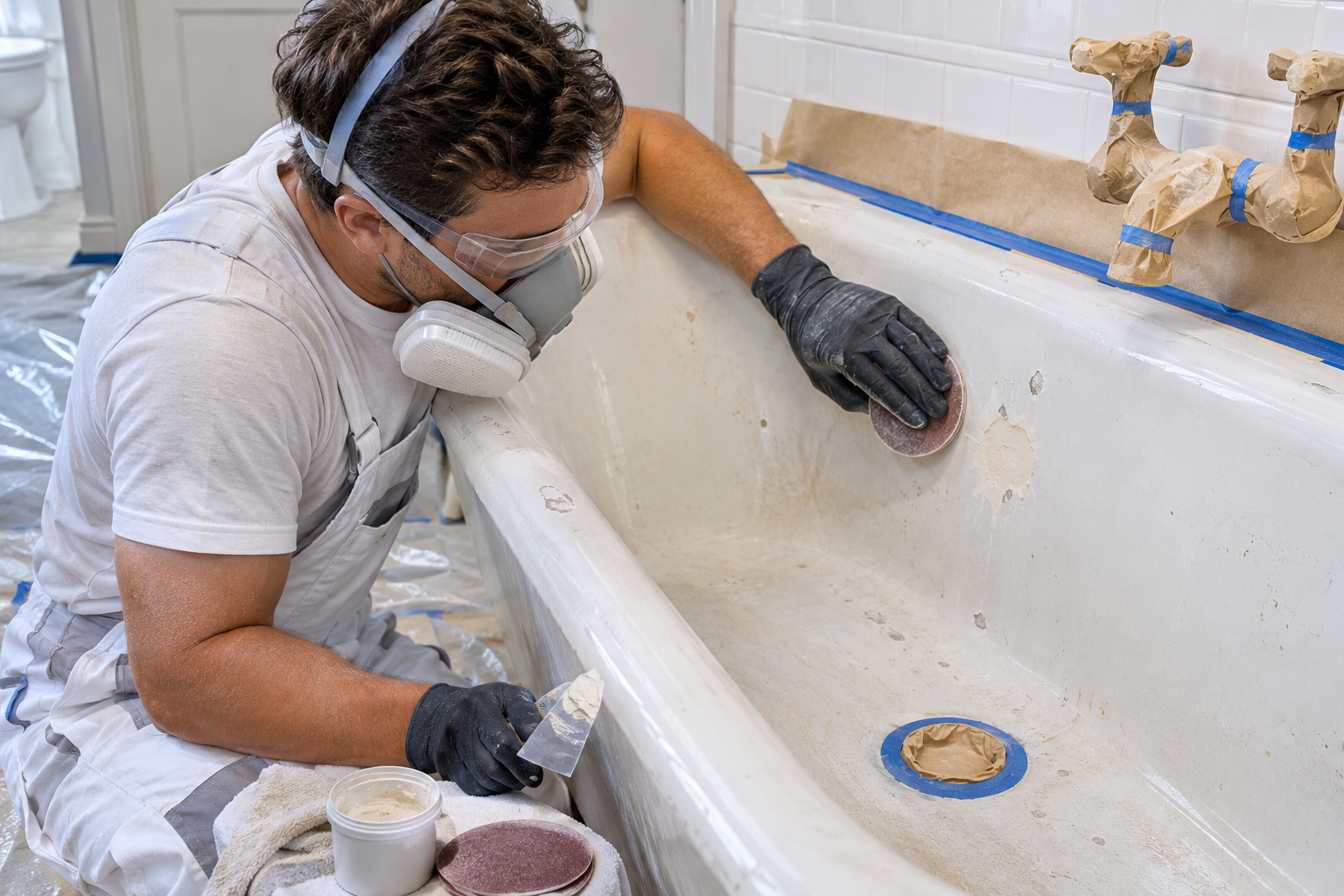
Most bathtubs in Singapore homes are acrylic, enamelled pressed steel or enamelled cast iron, with some fibreglass and stone-resin tubs. You can usually tell which you have in a minute with a magnet, a knock and a hand on the surface. It matters because each material fails in different ways and needs different preparation before it can be recoated.
Four quick tests
- Magnet test: hold a fridge magnet against the side or rim. If it sticks, the tub is steel or cast iron. If not, it is acrylic, fibreglass or stone resin.
- Knock test: tap the side with your knuckle. A hollow, plastic sound means acrylic or fibreglass. A ringing, metallic sound means pressed steel. A dull, solid thud means cast iron or stone resin.
- Touch test: acrylic and fibreglass feel warm to the touch. Steel and cast iron feel cold.
- Look at a chip: on enamelled metal, a chip shows dark metal or rust underneath. On acrylic, the same colour usually continues through the material.
The materials compared
| Material | How to recognise it | Common problems |
|---|---|---|
| Acrylic | Magnet does not stick; feels warm; sounds hollow; flexes slightly. Most whirlpool and jetted tubs are acrylic. | Scratches, dullness, stains, and cracks if the tub is poorly supported |
| Fibreglass (gelcoat) | Like acrylic, but often thinner and lighter; surface can show fine crazing | Fading, fine cracks, wear through the gelcoat |
| Pressed steel (enamelled) | Magnet sticks; rings when tapped; feels cold; lighter than cast iron | Chips that rust; rust around the drain |
| Cast iron (enamelled) | Magnet sticks; very heavy; dull thud when tapped; thick rim | Chipped or worn enamel, rust at chips, dullness |
| Stone resin / solid surface | Magnet does not stick; heavy and solid; often freestanding with a matt or satin finish | Stains and scratches; often sanded and polished rather than coated |
Why the material matters for a recoat
- Acrylic and fibreglass need a primer that bonds to plastic. Any cracks must be repaired, and a tub that flexes must be supported first, or the new coating will crack again.
- Steel and cast iron need all rust treated and chips filled before priming. Rust left under the coating comes back through it. See our rusty bathtub guide.
- Stone resin is often restored by sanding and polishing rather than coating. Check with the maker or a specialist first.
Our bathtub resurfacing guide explains what can and cannot be fixed, and how long a recoat lasts covers aftercare.
Rust or stain?
Brown marks on an acrylic tub are almost always stains, because acrylic cannot rust. They usually come from water, metal cans or toiletries and can often be cleaned. Brown marks on steel or cast iron at a chip are usually real rust and need repair before they spread.
See it on real bathtubs
Two short videos from our jobs show how the material affects the repair: an acrylic tub that cracked under foot, and a steel tub where the enamel failed and rust came through.
FAQ
My tub has jets. What material is it?
Almost certainly acrylic. Jetted and whirlpool tubs are usually moulded acrylic with a steel or timber support frame underneath.
Can every bathtub material be recoated?
Acrylic, fibreglass, pressed steel and cast iron can all be recoated if the tub is sound and well supported. A tub that is corroded through, or that moves when you stand in it, should be assessed for replacement.
Does the material change the cost?
It can. Rusty steel tubs and cracked acrylic tubs need more repair work before coating than a sound tub that is only dull or stained.
Send 9RENO a photo of your tub, a close-up of any damage, and the result of the magnet test, and we can tell you what a recoat would involve.
Leave a Reply