
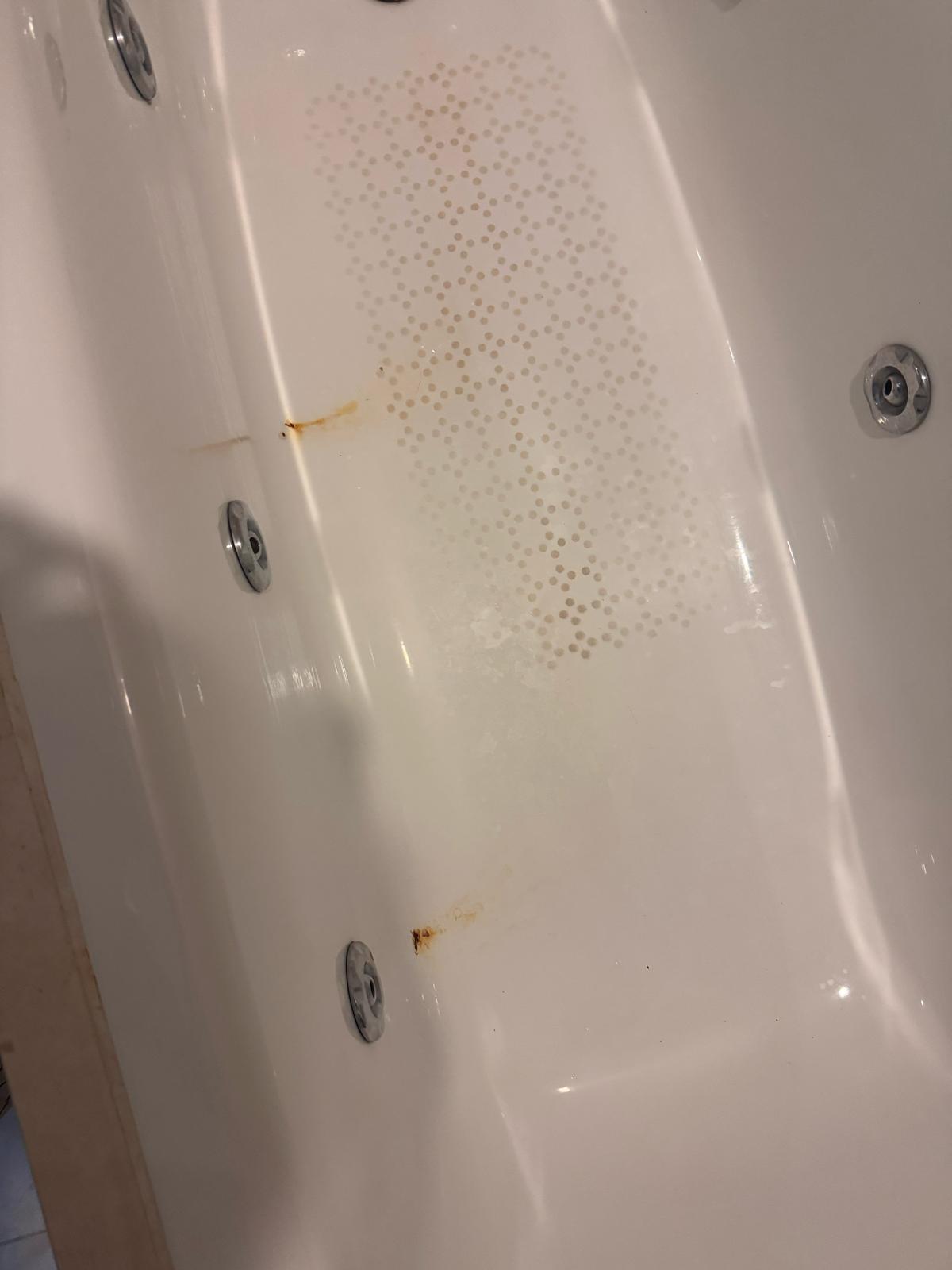
In our experience, a well-prepared bathtub recoat can last more than 5 years if it is looked after properly. How long yours lasts depends mostly on two things: how well the tub was prepared before coating, and how it is used and cleaned afterwards. A recoat that is rushed, or cleaned with abrasive pads, can start failing within months.
What decides how long a recoat lasts
| Factor | Why it matters |
|---|---|
| Preparation | Soap residue, grease, rust or loose old coating under the new layer is the most common cause of early peeling. |
| Condition of the tub | Rust that has eaten deep into the metal, or a tub that flexes when you stand in it, shortens the life of any coating. |
| Coating system | A bathtub needs a primer suited to its material and a hard-wearing coating, such as polyurethane. Ordinary wall paint fails quickly. |
| Curing | Using the tub before the coating has fully cured can soften or mark it for good. |
| Daily use | Dropped bottles, shower heads and tools chip the surface. Standing water under mats keeps the coating wet. |
| Cleaning | Abrasive pads and harsh solvents wear the finish down. Gentle cleaning keeps it glossy for years. |
How to make a bathtub recoat last
In the first days
- Do not use the tub until the curing period you were given has passed, even if it feels dry.
- Keep the bathroom ventilated while it cures.
Every day
- Rinse the tub after use and wipe away standing water, especially around the drain.
- Clean with a gentle, non-abrasive bathroom cleaner and a soft cloth or sponge.
- Lift bath mats after use so water does not sit underneath.
- Keep bottles and razors on a shelf or caddy, not on the tub edge where they can fall.
Things to avoid
- Scouring powder, abrasive pads and steel wool.
- Harsh solvents, paint stripper and strong drain cleaners poured into the tub.
- Suction-cup mats and adhesive tapes, unless your finish is approved for them.
- Hair dye and strong colouring products left on the surface.
- Dropping heavy or sharp objects, such as shower heads, into the tub.
Signs your recoat needs attention
| What you see | What it means | What to do |
|---|---|---|
| A small chip | Impact damage; water can now reach the layer below | Get it repaired early, before water spreads under the coating |
| Peeling at the drain or edges | Water has got under the coating, or the preparation there was poor | Repair the area; loose coating must be removed first |
| Orange-brown spots returning | Rust coming back through a chip or weak spot | See our rusty bathtub guide |
| A dull, rough surface all over | Normal wear, or abrasive cleaning | A full recoat may be due |
Small problems caught early are far cheaper to fix than a tub where the coating has lifted over a large area.
Can a bathtub be recoated again?
Usually, yes. When a recoat wears out, the loose or peeling coating is removed, damage is repaired, and the tub is primed and coated again. If the tub is corroded through or moves when you stand in it, replacement may be the better choice. Our bathtub resurfacing guide covers when to resurface and when to replace.
Warranty
9RENO gives a 1-year warranty on standard work. A recoat that is cared for as described above should last well beyond that.
FAQ
Does a spray finish last longer than a roller finish?
Preparation and the coating used matter more than the application method. See roller or spray: which is better for bathtub refinishing.
Can I use normal bathroom cleaner?
Yes, if it is non-abrasive. Avoid scouring powders and anything that says it removes paint or rust.
Will a recoat look like a new factory tub?
A good recoat looks clean and glossy, but it is a coating applied on site, not a factory finish. It will not hide a tub that is badly dented or out of shape.
Thinking about recoating your bathtub? Send 9RENO photos of the whole tub, close-ups of chips, rust or peeling, and the drain area, and we will tell you whether a recoat is worth it.
Leave a Reply